Category Archives: 6- INVENTIONS

UNDERWATER TOWABLE DRONES

Imagine skimming just above a lake bottom, exploring underwater terrain that’s never been seen by anyone before, all without leaving the safety and comfort of a powerboat.  Virtual reality goggles give you the feeling of being right on board the drone and the joy stick control puts you in the pilot seat.  As your powerboat pulls it along faster then a diver can swim, it records the changing water depth coming up and displays it on the VR screen.  All the action is recorded on an SD card in 360 video along with latitude and longitude so you will know the exact location of any treasures you find.

I came up with the idea for a towable underwater drone while seaching a lake bottom for an outboard motor that had gotten loose and fell off the back of a fishing boat.  The search area turned out to be much larger than anticipated.  Although the water was just 15 feet deep, visability was only 8 feet and the bottom could not be seen from the surface.  After a half hour of searching and my air tank half empty I had an idea.  To cover more area, instead of swimming, have them tow me with a rope behind the powerboat.  It worked so well I thought about it more and came up with the idea for a towable underwater drone.

Unfortunatly towable underwater drones don’t exist yet but could be built with today’s current technology.  Heres the rest of my idea with more details.

THE BASE:  The base unit contains the complete system that quickley connects to a permanently mounted bracket at the stern (port or starboard side) of any powerboat.  A storage compartment on the base contains VR goggles, a wired joy stick, and a cable with alligator clips that connect to the tow boats 12V battery for power.  A small rechargable 12V gel cell battery is also contained in the base for emergency power.  On the back of the base a depth finder is mounted at the end of a telescopic shaft that extends into the water.  The base also contains a gps, computer, electronics, and reel of 200 feet of tow cable that also provides power and data transfer for the drone.  The boom keeps the drone and tow cable clear of the boats motor and propeller.

HOW IT WORKS:  The pilot attaches the wired joystick control to any smooth surface by suction cups in a position thats comfortable to use and turns on the main power.  When the boat is in the desired area the pilot puts on the VR goggles connecting him to to the drone’s 360 degree camera via blue tooth conection with the base.

As soon as the drone is lowered by its cable via the joy stick middle finger switch, the camera and headlights turn on, video from the drones camera is sent to the VR goggles video screen, and recording begins on the memory card.  The 360 degree camera and VR goggles give the pilot the ability to look left, right, up and down in real time.  With the boat moving forward slowly, the pilot pulls back on the joy stick (to keep the drone on the surface) and continues to unwind tow cable until the drone contacts the water.  With the drone skiping across the surface the pilot continues to let out aproximately 100 feet of cable.   The base computer continuously records the depth of the water between the power boat and the drone and displays it as a “bottom profile line” on the VR goggle display.  This allows the pilot to know the depth of water where the drone is as well as any obstacles or depth changes 100 feet ahead.

The digital proportional joy stick is conected to the drone through the base computer to create a fly-by-wire control system.  Two servos in the drone control up/down and left/right respectively to create the following functions:

  • Pull back to go up
  • Push forward to go down
  • Move left to go left
  • Move right to go right

Information from the “water speed sensor” on the drone is sent into the base computer to determine the ratio of movement of the drone’s control surfaces to joystick input.  The computer will also override joystick input should depth sensors on the tow boat or drone indicate imminent impact with the bottom.  These 2 fly-by-wire features allow for both safety and ease of control by new/inexperienced pilots.

Video is sent from the drone’s low light 360 degree camera to the base computer through the tow cable.   The following overlay of information is added to the video before being sent by blue tooth to VR 360 degree  goggles:

  • Drone Depth” from depth guage on drone
  • Bottom Depth” from depth finder on drone
  • Speed of Tow Boat” determined by base’s GPS
  • A “Bottom Profile Line“, created from the base’s depth finder data, the line shows a profile of the bottom between the drone and the tow boat. This aids to warn the pilot in murky water and high speeds of sudden depth changes and obstacles coming up.  It also shows the drone’s position in relation to the bottom.
  • Distance to Tow Boat” (same as the length of bottom profile line being displayed).
  • Latitude and Longitude” of the drone.  The base computer uses the GPS of the base unit and calculates direction of the tow boat, length of tow rope, depth of drone and left/right angle of the tow cable leaving base unit to get the actual latitude and longitude of the drone itself.
  • Current “Date and Time” with seconds
  • REC” indicating video is being recorded
  • The following warning messages are displayed only when applicable: “BACK UP POWER” when power from the tow boat is interrupted and base has switched over to the back up enclosed battery / “LOW MEMORY” when the memory card used to record the video gets close to full / “COMPUTER OVERRIDE” when computer takes over joy stick control to prevent impact with the bottom.

Any number of blue tooth VR goggles can be synced with base allowing passengers in the tow boat to feel like passengers on the drone.  Independent signals allow everyone to look different directions at the same time and help ensure the pilot dosen’t miss anything interesting.  A button on top of the joy stick enables the pilot to take a still photo of anything he sees thats interesting.  All the information including longitude, latitude, date, and time is captured on the photo making it easy to go back through the video and play back the same location later.

When ready to return, the pilot squeezes the cable in button with index finger on the joy stick and the electric motor in the base winds in the tow cable. When the drone makes contact to the docking conection at the end of the boom, power to the drone is shut down, lights and camera turn off, and a data folder is written to the memory card.  The folder is named “the date and time the drone left the docking connection” and contains a video file of the whole trip and a seperate file with any still photos the pilot took.  The video can be played back later with any VR goggles making it possible to relive the experience over and over.

An App. for a tablet could also be created to work with the base’s GPS to do a grid search.  Enter 3 or more GPS points to form a search area along with the bottom water visabiliy on the tablet App.  The GPS on the base unit sends information by blue tooth to the tablet enabling the App. to provide a line for the power boat driver to stay on so the entire search area is visually covered by the drone.

Towable underwater drones would combine the thrill of being an explorer with the fun of a video game.

Dave Lister

listerlogic.com

Note: This is an original idea by me but there may be similar products or patents already.  I am not an expert, if you attempt to build always consult with an expert and check with all local code and laws.  Build at own risk.
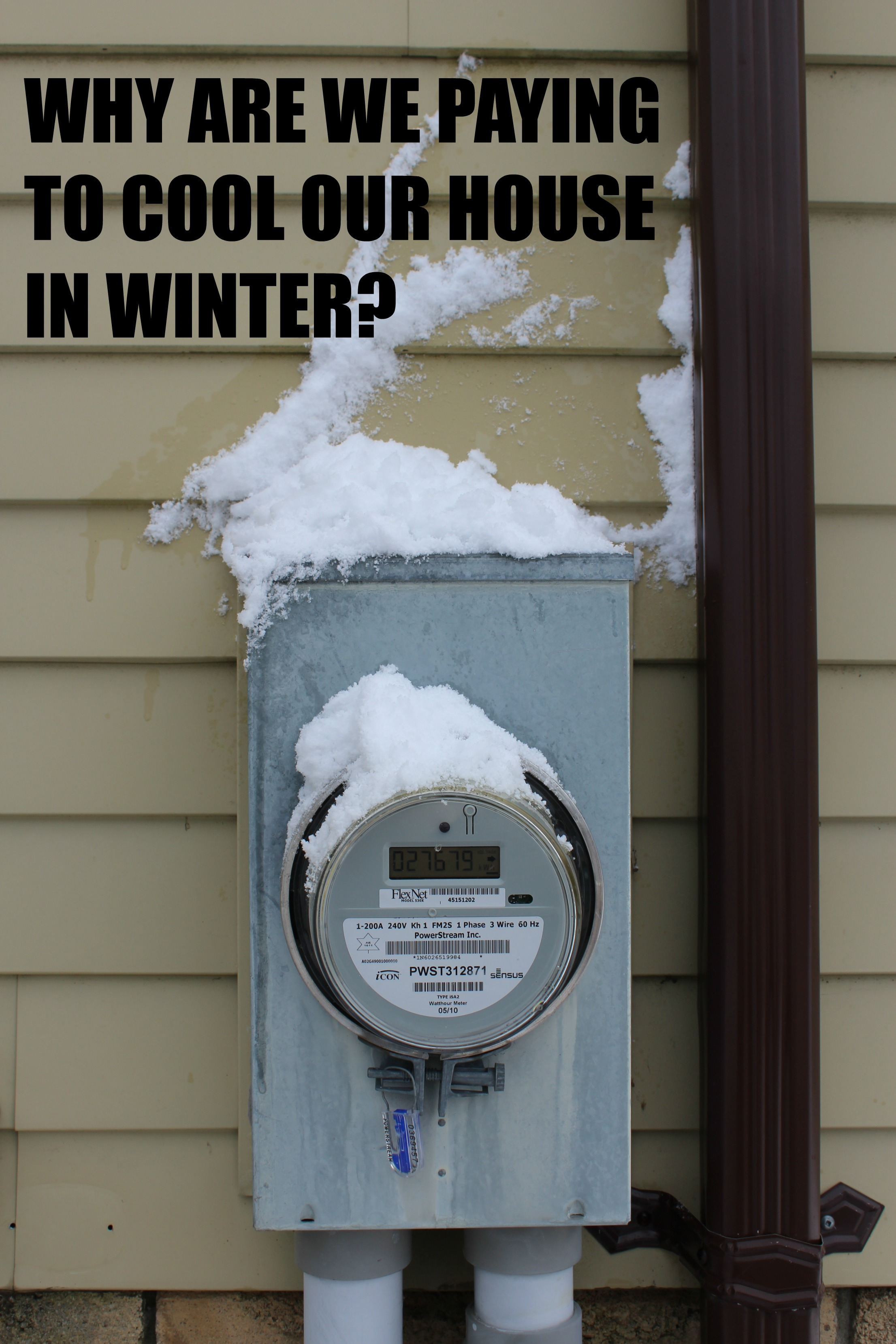
WHY ARE WE PAYING TO COOL OUR HOUSE IN WINTER?

hydro metre

It’s minus 5 degrees outside but inside the house it’s warm and comfortable.  If your like most people, as the furnace is running to warm your house the hydro metre is running extra fast powering compressors to keep the inside of the fridge and freezer cold.  In climates that are often below the freezing mark 4-5 months out of the year why not use the outside elements for cooling?

IMG_0417

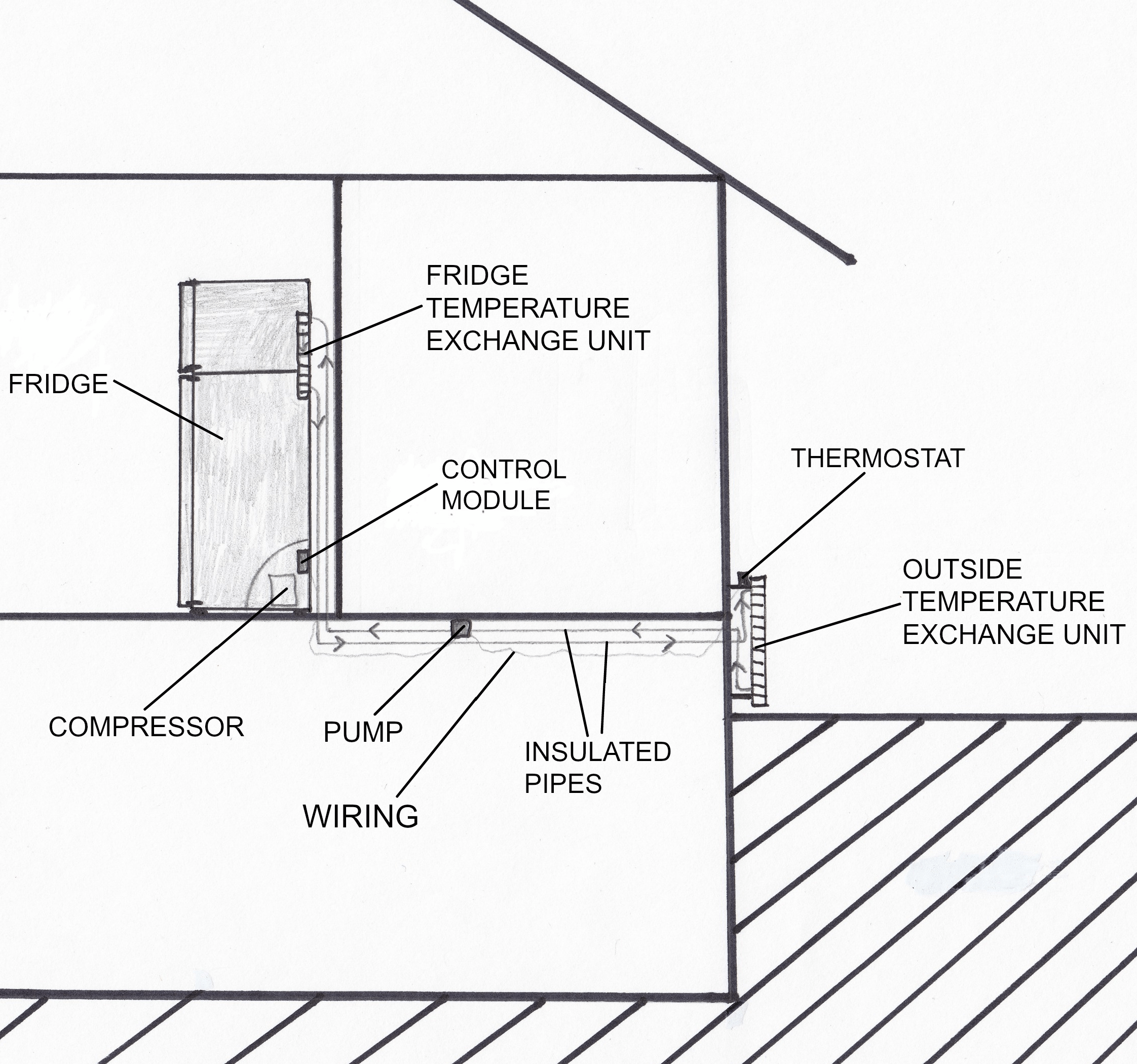
By installing a temperature exchange unit similar to a car radiator outside (photo above)  and a smaller one inside the fridge it should be possible on cold days to use a very low energy water pump to circulate plumbing antifreeze through insulated pipes between the two.  The circulating water pump would use a small fraction of the energy of the fridges compressor and if used 4 months out of the year should not only save money on energy but also extend the life of the appliance by 33%.

updated fridge3

When the outside thermostat registers -5 degrees or colder a signal is sent to the control module inside the fridge and a relay disconnects the fridges compressor.  Instead of the fridges thermostat activating the compressor when it becomes too warm the pump is activated instead and cold plumbing antifreeze from the “outside temperature exchange unit” is brought through insulated pipes to the “fridge temperature exchange unit” and cools the fridge.  When the fridge is cold again the control module shuts off the pump.

On a commercial level such as in a supermarket with rows of freezers, using the outside cold from the winter has a much bigger benefit.  Cooling tubes mounted in the freezer during manufacturing could be used in winter to circulate cold plumbing antifreeze from outside storage reservoirs.   Conventional cooling compressors would still be used for summer time or warm winter days.

Another possibility is on cold winter days would be to use cold air instead of cold liquid.

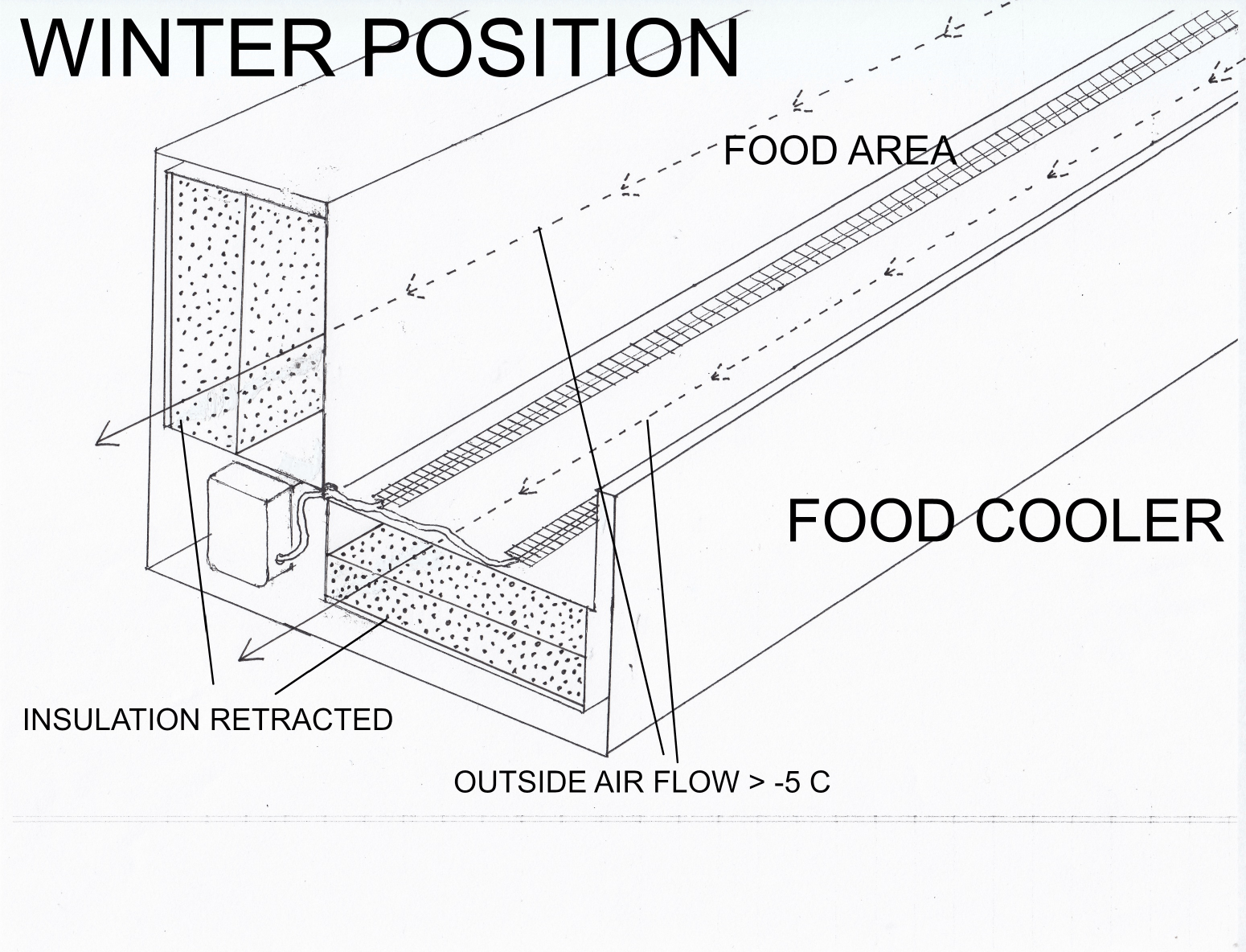
A thermostat in the food cooler from a grocery store would activate a roof vent fan.  Cold outside air would be blown down through insulated ducts to the inside walls of the food cooler.

correct FINISHED DIAGRAM 1

In winter, the insulation from the inside walls of the food cooler would be automatically retracted creating a channel for cold outside air to be blown through.

WINTER POSITION MONK REDUCED

In summer time the insulation is automatically moved up against the inside walls of the food cooler. A traditional compressor is used with evaporator coils.

PIC MONK SUMMER POSITION FINAL REDUCED

Its hard to believe that in todays day and age we still waste so much energy and money creating a cold area for food when in the winter time our house is surrounded by it.

Dave Lister

listerlogic.com

Note: This is an original idea by me but there may be similar products or patents already.  I am not an expert, if you attempt to build or use always consult with an expert and check with all local code and laws.  Build and use at your own risk.  I take no responsibility for injury, death or damage to property.


CONTROLLING THE SPREAD OF CAT LITTER

FINAL good

Anyone that owns a cat knows one of the biggest problems is the cat litter.  Aside from the smell, bits of litter stuck to the cat’s paws as it leaves the litter box end up end up all over the floor.  Unless swept up constantly they quickly get tracked everywhere.

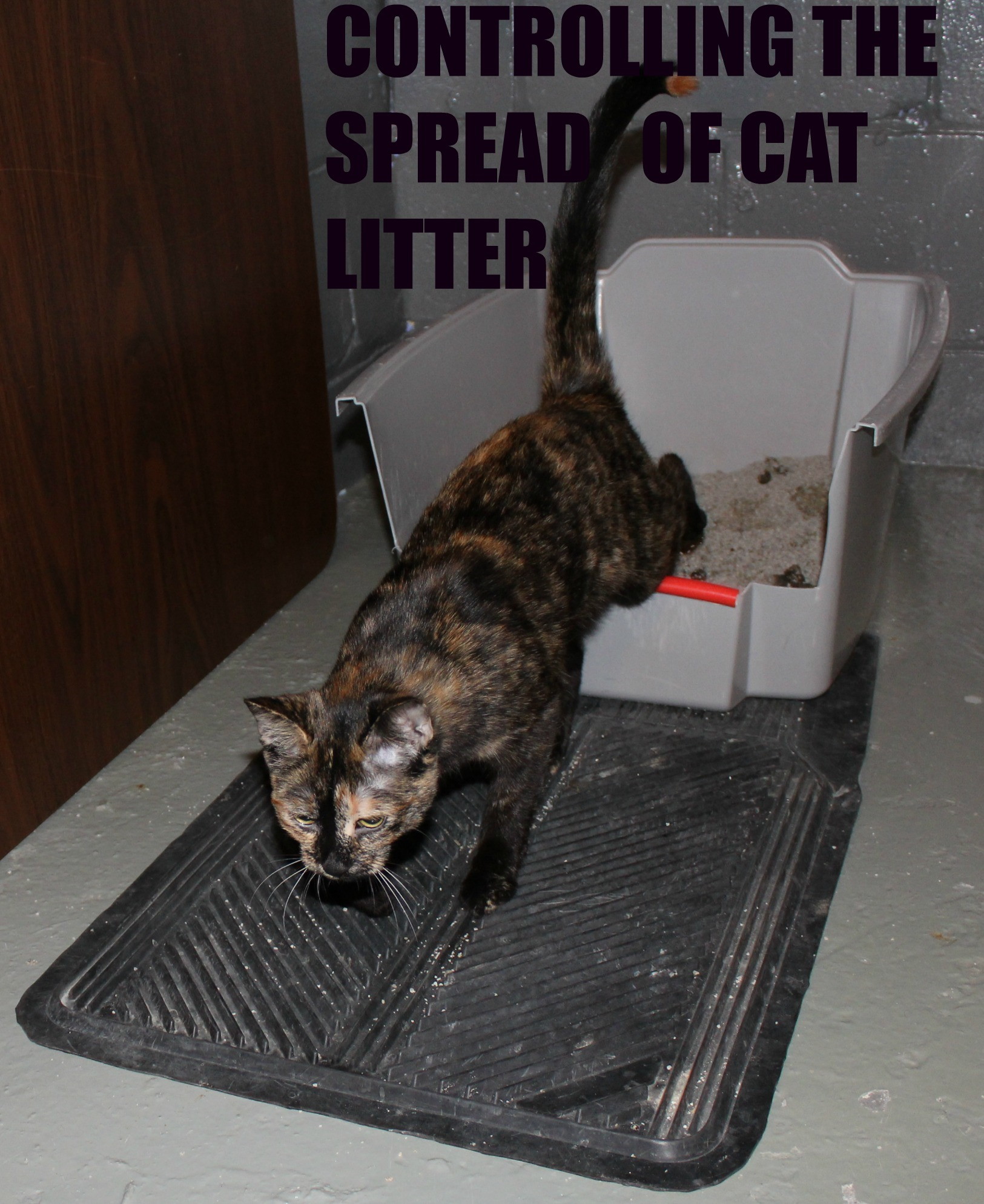
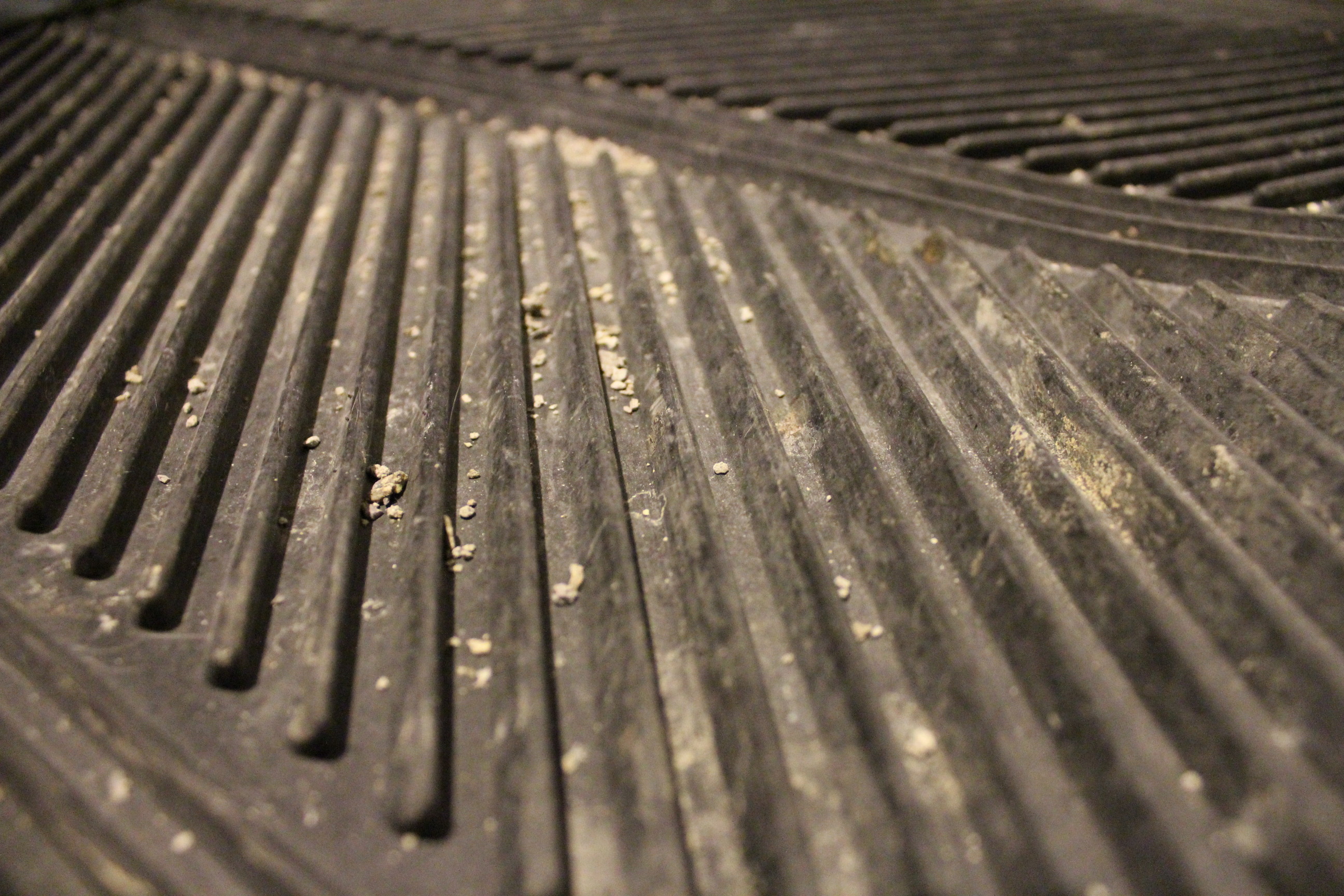
I have found that placing an old car floor mat in front of the area the cat uses to exit the box  that 90% of the litter gets trapped in the groves of the mat reducing the need to sweep the floor as often.

30dp50

Most cats take a while to get used to walking on the mat so at first you will most likely have to block off 3 sides of the litter box with something high so they have to exit to the one side that has the mat in front.  Once they are used to the mat, cutting a grove to make one side of the litter box lower will encourage them to use that side and step on the mat as they exit.

Dave Lister

listerlogic.com

Note: This is an original idea by me but there may be similar products or patents already.  I am not an expert, if you attempt to build or use always consult with an expert and check with all local code and laws.  Build and use at your own risk.  I take no responsibility for injury, death or damage to property.

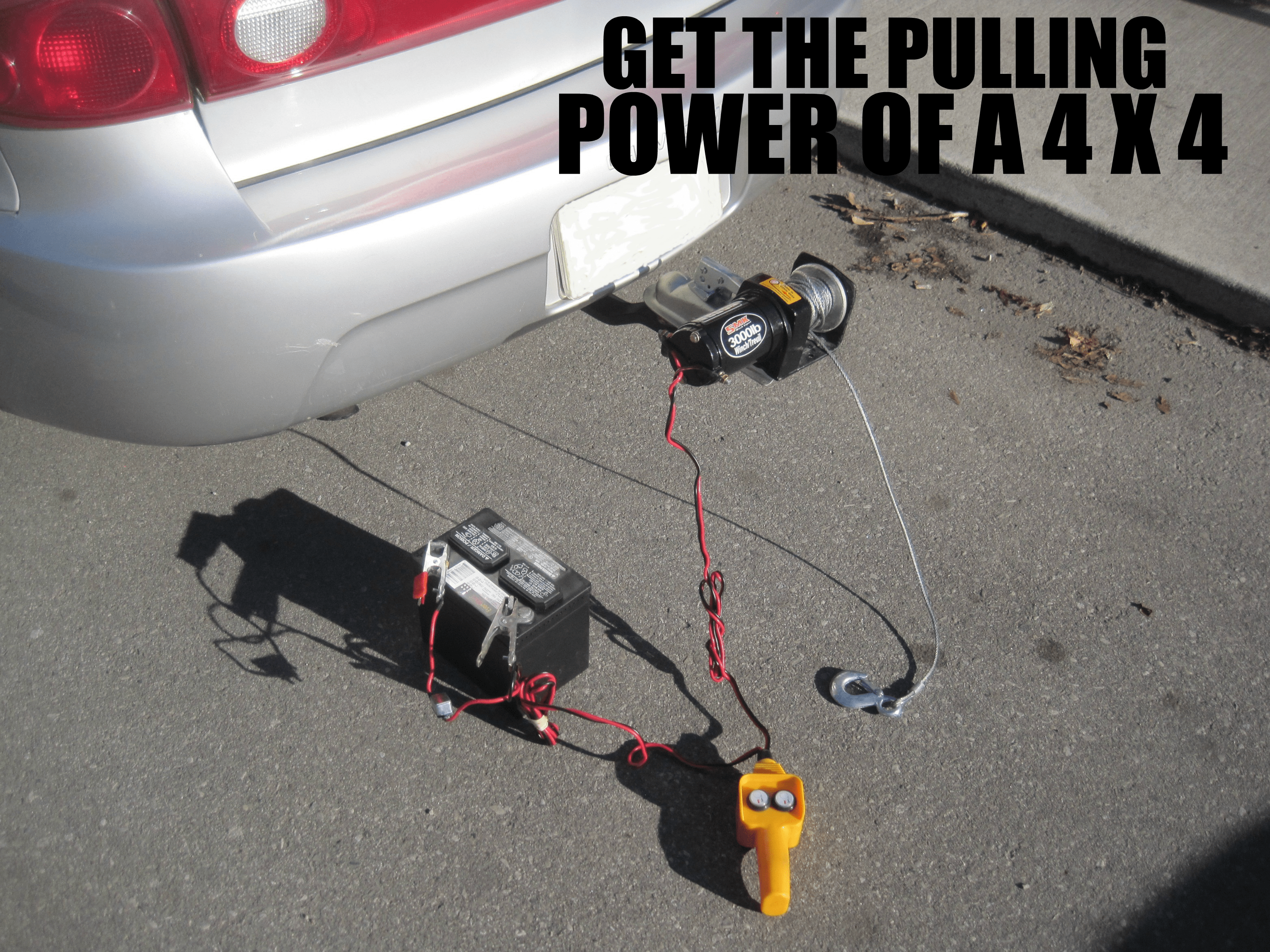
GET THE PULLING POWER OF A 4 X 4

WINCH 1

Bolt a 12 volt, 3000lb winch onto a trailer coupler and attach it to the trailer hitch of any vehicle and for around a $100.00 you now have the power to move heavy loads short distances.

close up of winch

IMG_2498

I recently bought a boat and trailer in late fall that I needed to get into a tight spot for winter storage.  A regular size vehicle was too big and my small lawn tractor had no where near the power to move it, so I built this device  to attach to the lawn tractor’s trailer hitch.  By having someone hold the brakes down on the lawn tractor and blocking the wheels, with the engine turned off and the transmission in neutral, I was able to move the boat to where I wanted it by just using the winch.

photoshoped boat

When it came time to take the boat out of the water the 2 wheel drive pickup I was using could not get enough traction on the launch ramp to pull the weight of the boat and trailer up it.  I had this device with me so I parked my Cavalier at the top of the ramp on level ground.  I attached this device onto the trailer hitch of the car and connected the hook to the front bumper of the pickup.  I then had someone start the car (so the power brakes would be working), put there foot firmly on the brake (preventing all 4 wheels from turning) and place the car in neutral (to prevent damage to the transmission).  I was then able to use the winch to pull the pickup, boat, and trailer up the launch ramp.

There is no telling how many uses a device like this could be good for.  Next spring I am going to use it to try to remove an old tree stump.

Dave Lister

listerlogic.com

Note: This is an original idea by me but there may be similar products or patents already.  I am not an expert, if you attempt to build or use always consult with an expert and check with all local code and laws.  Build and use at your own risk.  I take no responsibility for injury, death or damage to property.  Moving heavy objects is extremely dangerous and involves a great deal of knowledge and common sense.

SAVING ENERGY WITH SMART BLINDS & RADIANT HEAT / INVENTION IDEA

SMART BLINDIf you have a large window in your house that gets a lot of sun, whether the blinds are open or closed through out the day could make a significant difference in your heating and cooling energy costs.

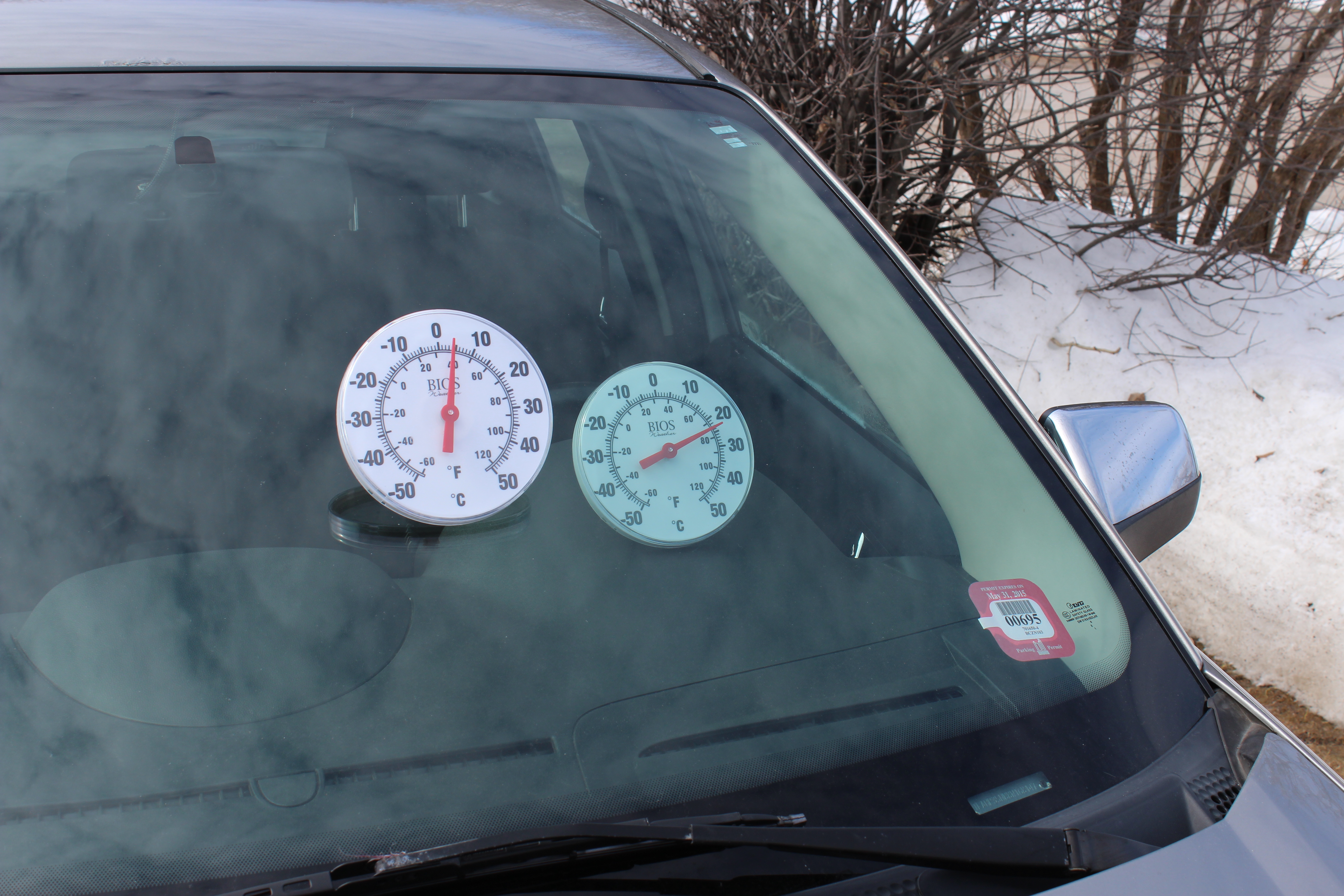
The photo below shows the difference in temperature inside and outside a parked car in the winter. The temperature inside the car is about 20 degrees Celsius warmer then outside.

IMG_0160

What if your blinds worked automatically to take advantage of this heat energy.  In the winter time when the sun was shinning through the window the blinds would open to use the radiant heat from the sun to help heat the house and at night or when it was cloudy the blinds would close to help insulate from the outside cold.

We all know how much heat can build up in a car in the summer and the same goes for your house if the sun is shining in. In the summer time the blinds would do the opposite. When the sun was shining through the window the blinds would close keeping the house cooler and saving on air conditioning costs.

PROTOTYPE PLANS

IMG_0256

IMG_0250

Only when direct sunlight comes in contact with the solar cell would the circuit board activate the motor.  When the 3 way switch was set to winter the blinds would open but when there is no direct sunlight making contact with the solar cell the blinds would close.  When the switch is in the manual position the power is disconnected to the motor and the blinds remain in what ever position they are set.  When set for summer the blinds would close whenever direct sunlight comes in contact with the solar cell.  The solar cell would also keep the 2 x “AA”  rechargeable batteries charged.

Dave Lister

listerlogic.com

Note: This is an original idea by me but there may be similar products or patents already.  I am not an expert, if you attempt to build always consult with an expert and check with all local code and laws.  Build at own risk.